Automation Requirements
Automation is not always a good idea. Sometimes the investment pays back in four months. Sometimes in thirty years. The difference only becomes visible after the numbers are worked out. This engagement is about doing that calculation before money is spent - and making a conscious decision about whether to proceed.
What this engagement covers
Most automation projects fail not because the technology is wrong, but because no one asked the right question first: is this worth doing at all?
The answer requires two things. First, an honest measurement of current labour costs on the process in question - how much time it actually takes, how often, and what that time costs. Second, a preliminary estimate of what automation would cost - not a precise figure, but a realistic lower bound based on functional requirements and an initial assessment of technical complexity.
Put these two numbers together and you get a first answer: does the saving justify the investment, and over what timeframe? If the answer is no, the engagement ends here - and the client has saved not just the cost of development, but the cost of writing a full technical specification for something that was never going to make financial sense.
If the answer is yes, or promising, the next step is a detailed technical specification and a more precise cost estimate. That is a separate piece of work. This engagement is the gate before it.
How it works
Three reporting processes - three different answers
A company prepared regular statistical reports for a government authority. Three separate reporting processes were evaluated for automation potential. All three involved collecting data from multiple sources and compiling a structured report. The question in each case was the same: does automating this process make financial sense? The answers were different in each case - which is precisely the point of this engagement.
The analysis was based on actual time measurements per source, actual salary costs, and a preliminary automation cost estimate of 250 EUR per data source. Labour cost was calculated at 12.50 EUR per hour based on a 2,000 EUR monthly salary and a standard 160-hour working month. Three processes were evaluated: a monthly report with 12 sources at 20–30 minutes per source; a quarterly report with 6 sources at 5 minutes per source; and a weekly report with 10 sources at up to 60 minutes per source - where data arrived as unstructured text in email, requiring significant manual interpretation.
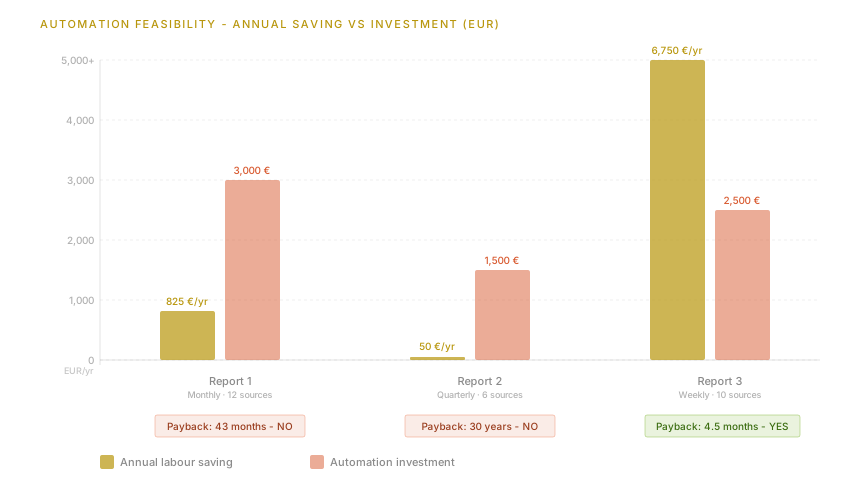
Report 1 (monthly, 12 sources): current cost 69 EUR/month, automation investment 3,000 EUR, payback 43 months. Verdict: do not automate. Report 2 (quarterly, 6 sources): current cost 50 EUR/year, automation investment 1,500 EUR, payback 30 years. Verdict: do not automate. Report 3 (weekly, 10 sources, unstructured text): current cost 562 EUR/month, automation investment 2,500 EUR, payback 4.5 months. First-year ROI approximately 170%. Verdict: automate.