Business Process Audit
Most business problems are not caused by bad people or bad ideas. They are caused by processes that were never properly designed - or that outgrew their original design without anyone noticing.
What this engagement covers
A business process audit is a structured investigation into how work actually gets done in your organisation - not how it’s supposed to get done according to a manual or an org chart. The gap between the two is usually where the problems live.
Depending on the situation, this can mean remote interviews and document analysis, or it can mean sitting alongside your team and observing the work directly. Some processes have clear owners and good documentation. Others have neither - and reconstructing the real picture takes fieldwork.
I adapt the approach to what the situation requires. The output is always a clear picture of the current state and a set of specific, actionable recommendations.
How it works
Payment approval process - from email chain to platform
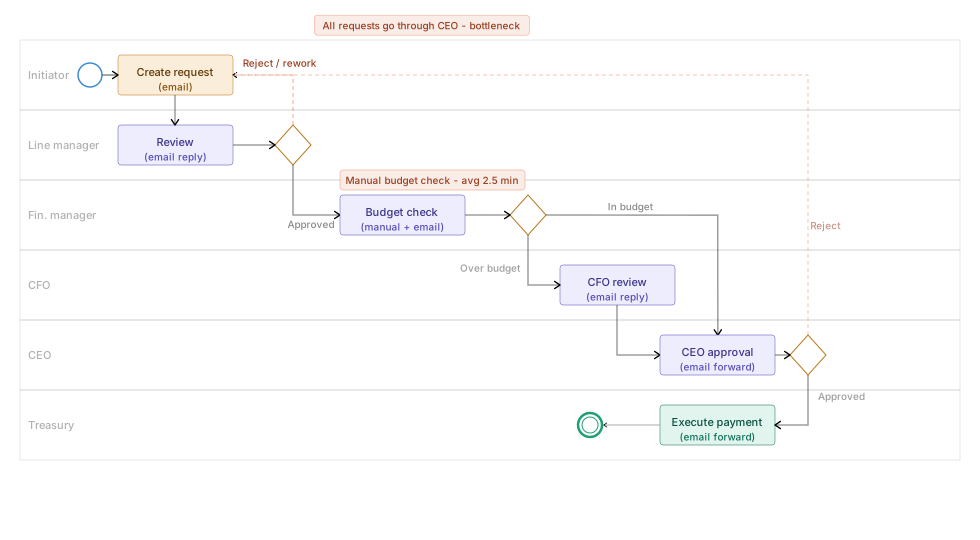
One of the most common inefficiencies we encounter is an approval process that runs entirely through email. No audit trail, no status visibility, frequent delays caused by a single unavailable approver - and in this case, every single request flowing through the CEO regardless of amount or category. The example below shows a real restructuring of a secondary expenses approval workflow at a UAE retail company.
Every request - regardless of amount or department - passes sequentially through line manager, finance manager (manual budget check against a spreadsheet), CFO if over budget, and finally CEO. The CEO receives 100% of all requests. Each step involves composing or forwarding an email. Returns for revision restart the chain from the beginning. Average operational processing time across all participants: 6.2 minutes per request, not counting waiting time in queues.
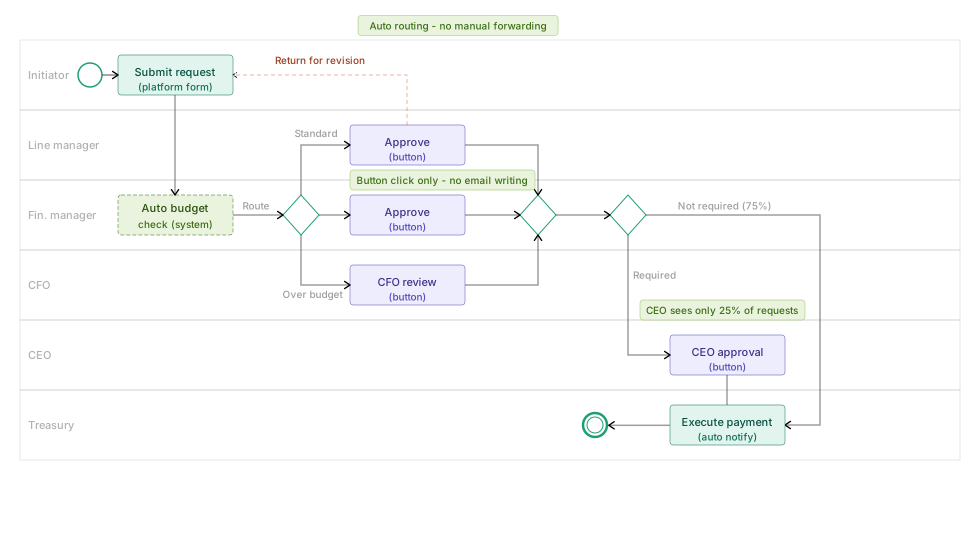
Budget verification is automated at submission - the system checks against the current budget and determines the routing automatically. Standard requests within budget go to the line manager only. Over-budget requests add the CFO to the route. CEO approval is required for only 25% of requests based on predefined department and category rules. Every action is a button click, not an email. Full audit trail is maintained automatically. Average operational processing time: 1.0 minute per request.
Time cost analysis - before and after
Part of the audit deliverable was a quantified analysis of time costs across all participants in the approval chain. The chart below shows operational time per request by participant - excluding reading time which is identical in both scenarios - and the resulting monthly saving across the team.
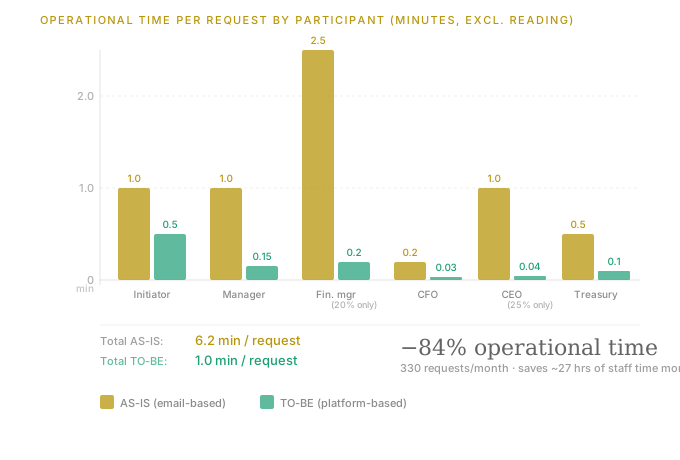
Finance manager time drops most dramatically - from 2.5 minutes (manual spreadsheet check plus email) to 0.2 minutes average (automated check, button only for the 20% of over-budget cases). CEO time drops from 1.0 minute on every request to effectively zero on 75% of requests. Total monthly saving: approximately 27 staff hours freed across the approval chain.